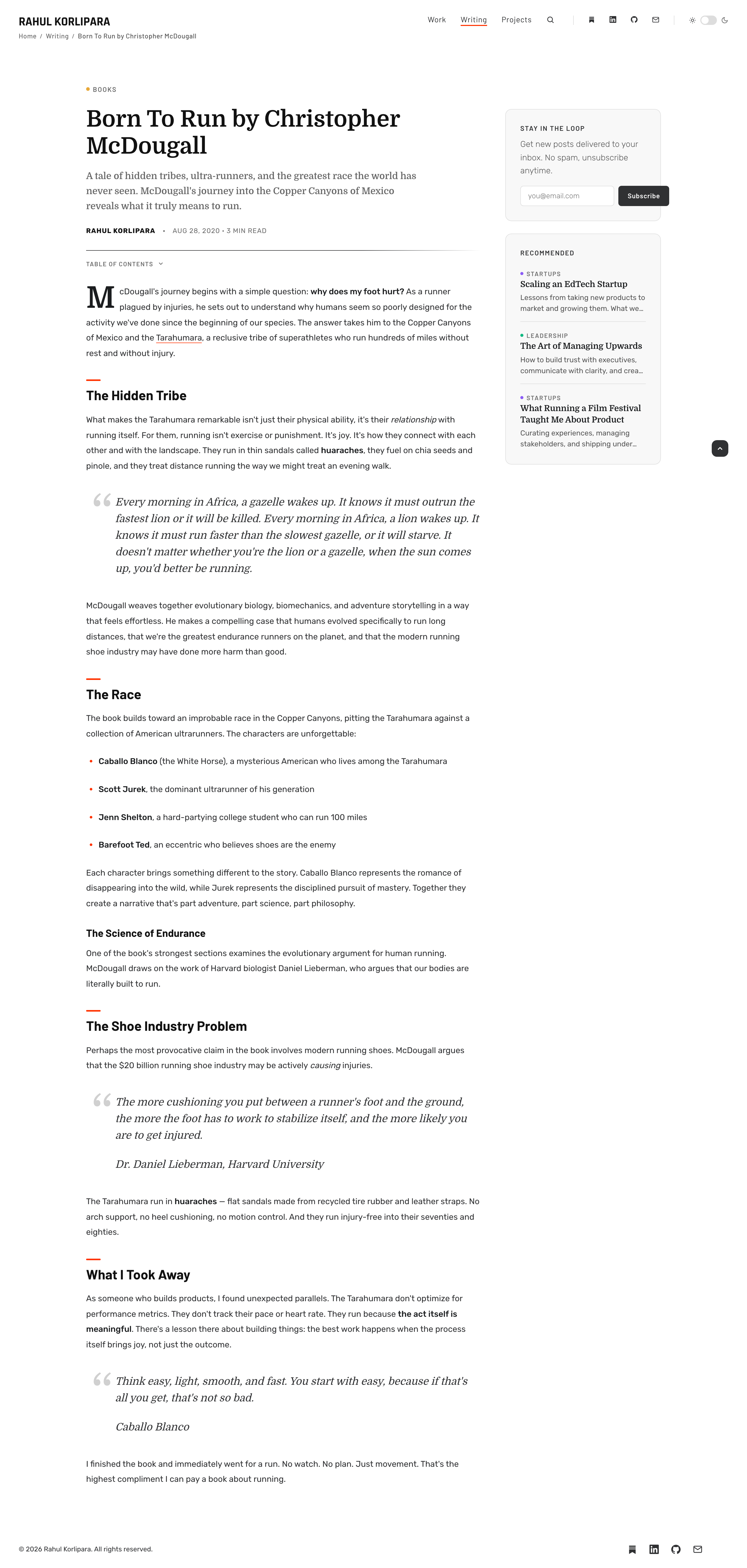
A content management system built to leverage AI for research, content reviews, meta-data generation, content repurposing for distribution, SEO and AEO (LLM/Answer Engine Optimization). Features LLM quality gates before publishing, and a Model Context Protocol server so agents read and write the same data the editor sees.
Content management systems were designed for a world where humans read and humans wrote. As of 2026 the most consequential curator for many forms of content before it reaches a human is an AI agent, and the most efficient writer is often a language model with a prompt and a stylebook. There is however a good middle ground where one can use AI for reviews, distribution, ideas and suggestions while still writing personally. That is what this CMS aims at.
korlipara.net uses AI to enable a design center for content creation. Per-metadata-field authorship tags record whether each value came from a human editor or a model. An LLM diagnostic gates publication, returning a structured assessment of the draft without editing it. A distribution pipeline drafts nine social variant suggestions per article and rates its own output before review. A Model Context Protocol server with thirteen tools makes the entire content surface programmable. JSON-LD schema delivery per content type and an llms.txt feed at the root publish the site to AI agents the way sitemaps once published it to crawlers.
The stack is small on purpose. Express. SQLite. Vanilla JavaScript modules. No bundler. Built with Claude Code, using its skills and sub-agents as a repeatable process for production-grade work. Roughly 900 automated Playwright tests verify every change visually at 1440px against the design reference. CI/CD gates ensure quality and reliability. The whole thing runs on a $5 Hetzner VPS with Litestream replicating SQLite continuously to Backblaze for backup.
The site you are reading runs on it.
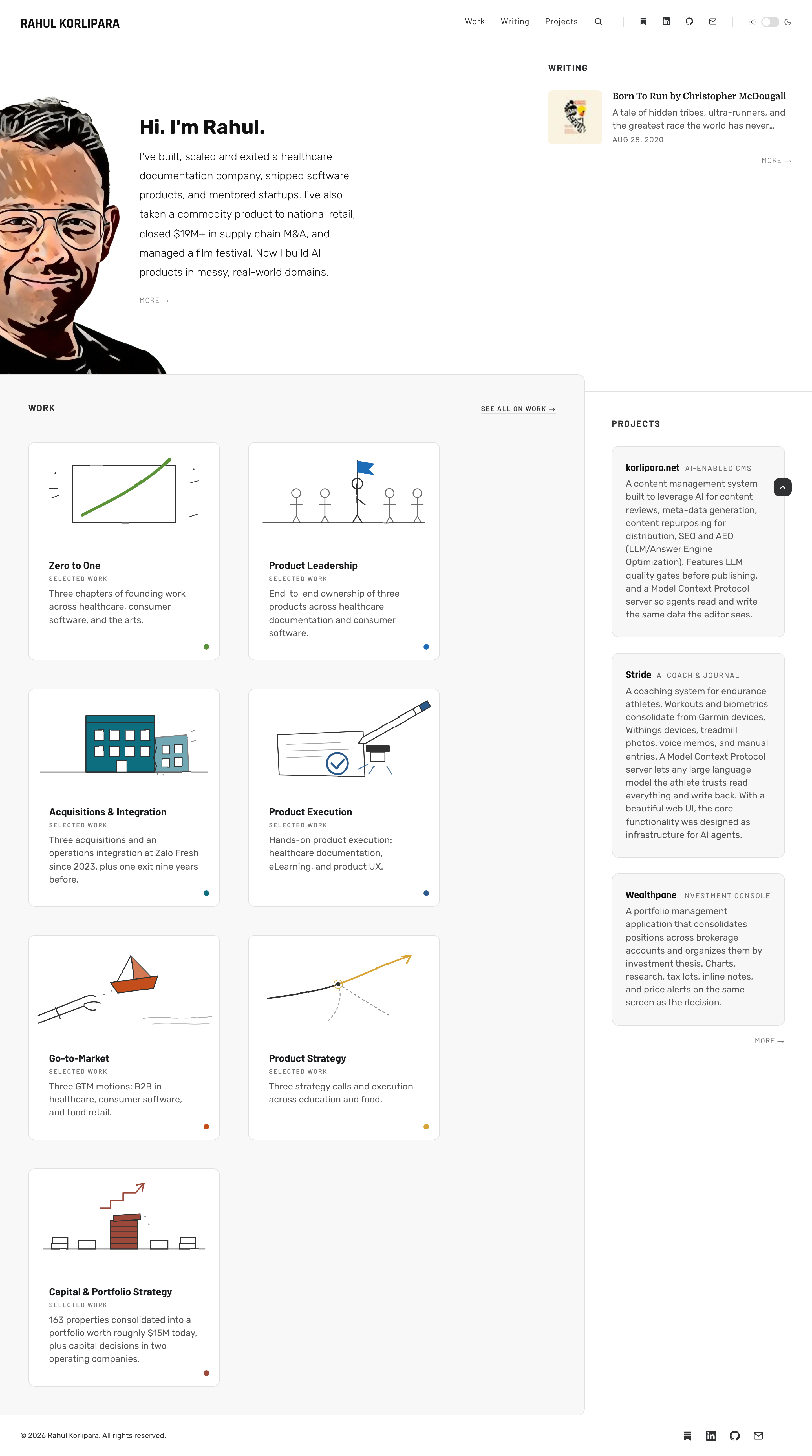
The home page surfaces published work, writing, and projects. Section visibility toggles can disable complete sections of the website with a single click.
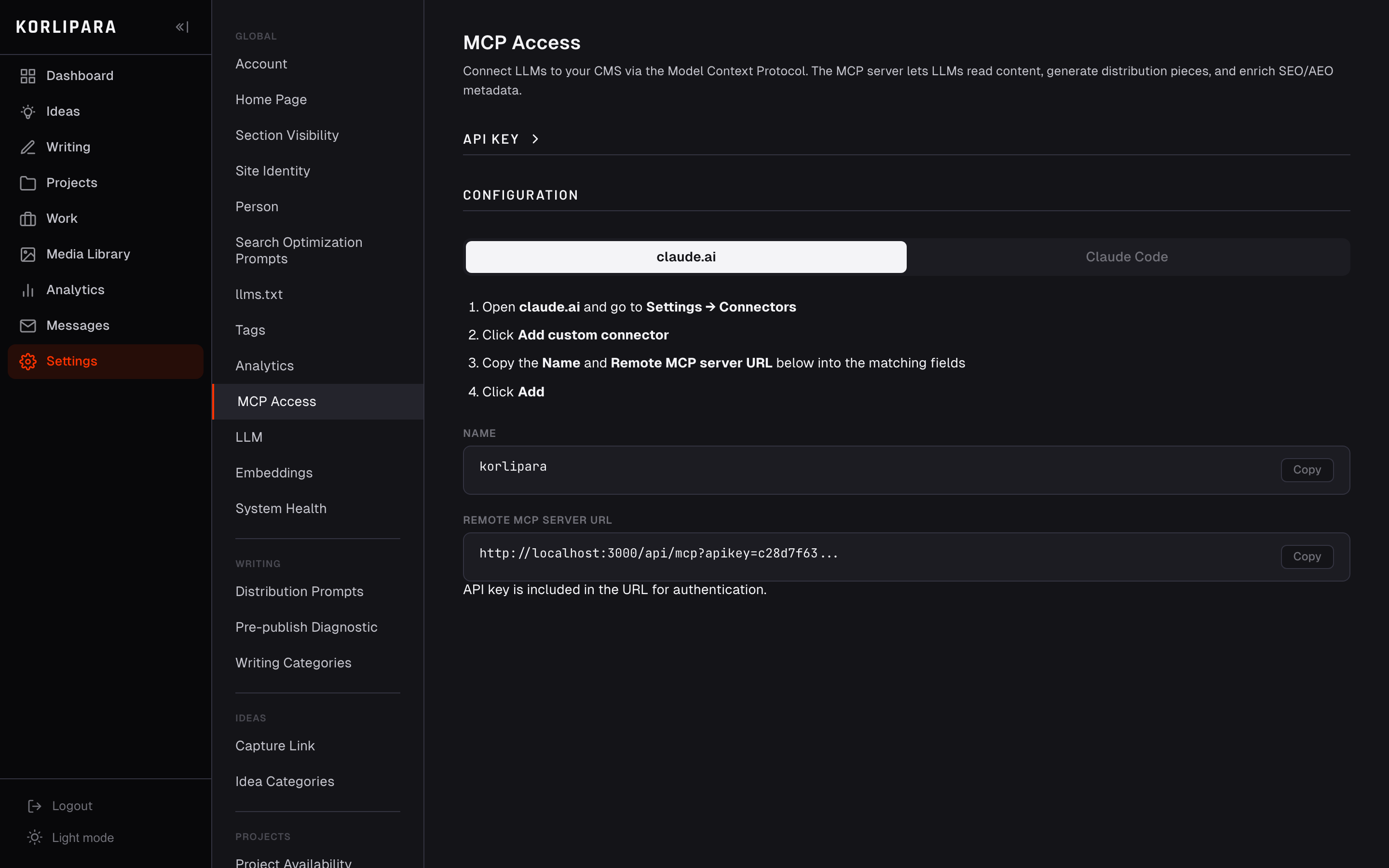
Thirteen MCP tools cover content reads, project writes, image upload, SEO enrichment, distribution drafts, and the pre-publish diagnostic. LLM workflows operate the site the way an editor does.
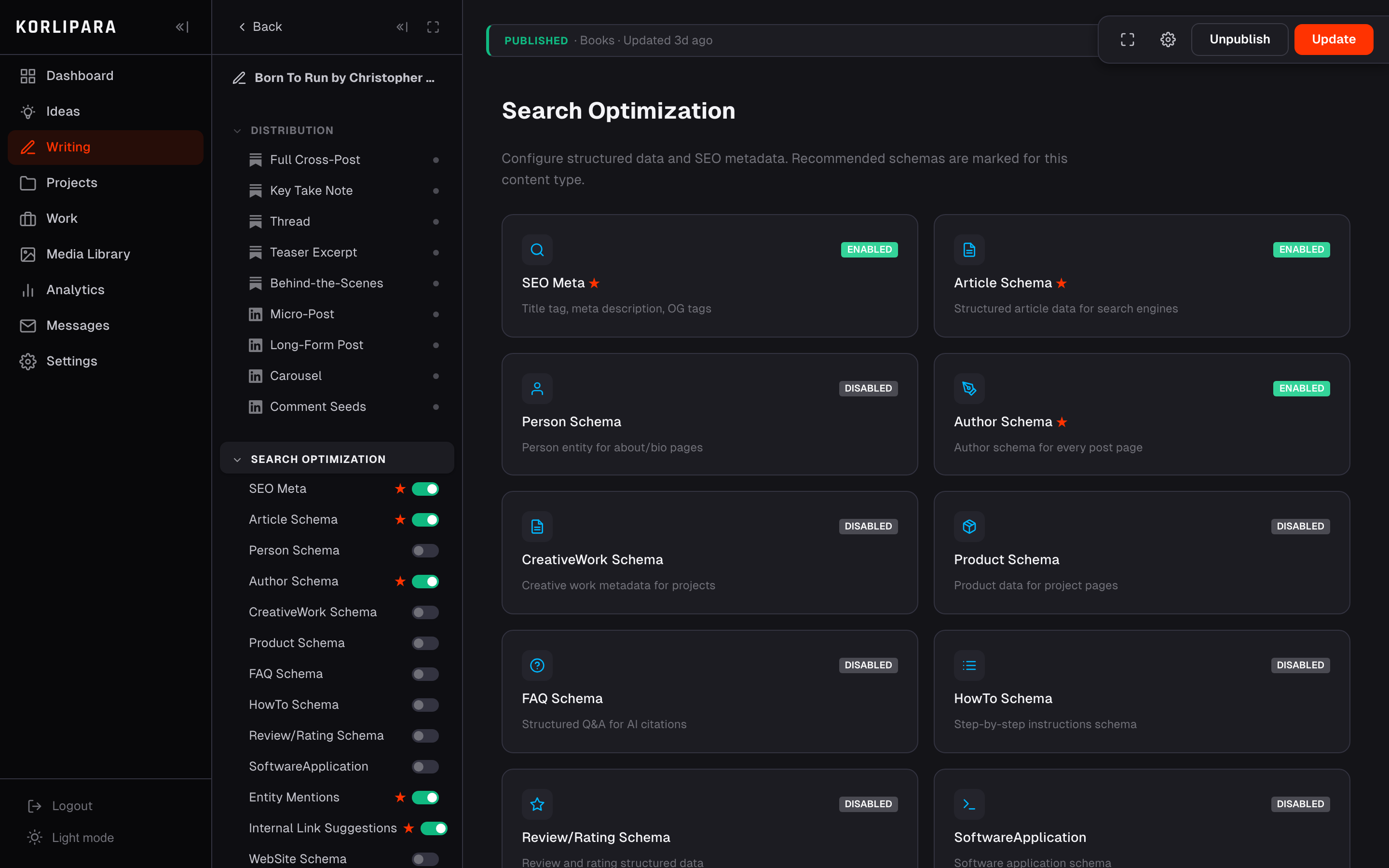
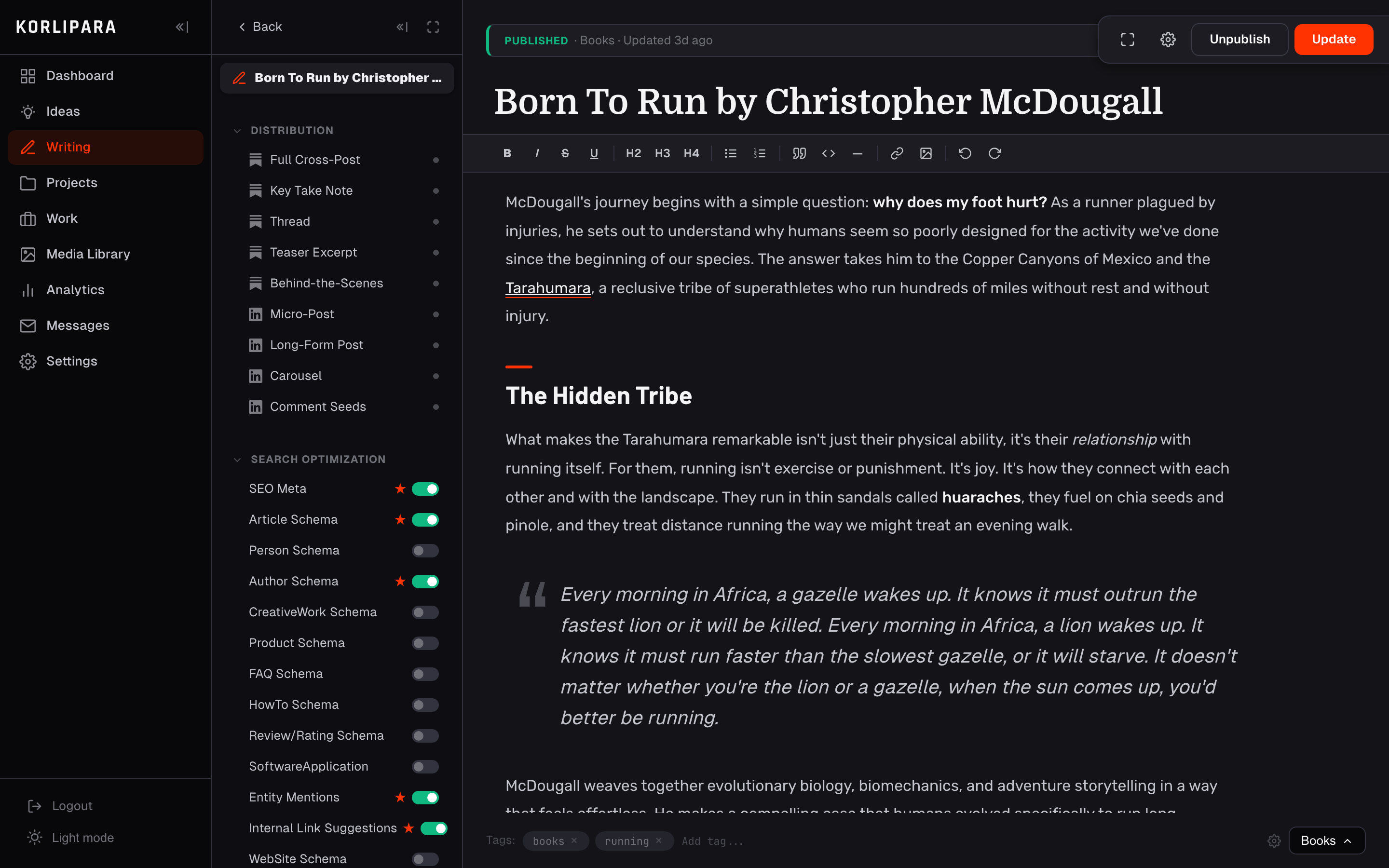
Every metadata field carries a tag of who set it, human or model. The admin renders the tag as an orange star; the MCP read tools surface the same tag. The audit trail is what makes the stack auditable.
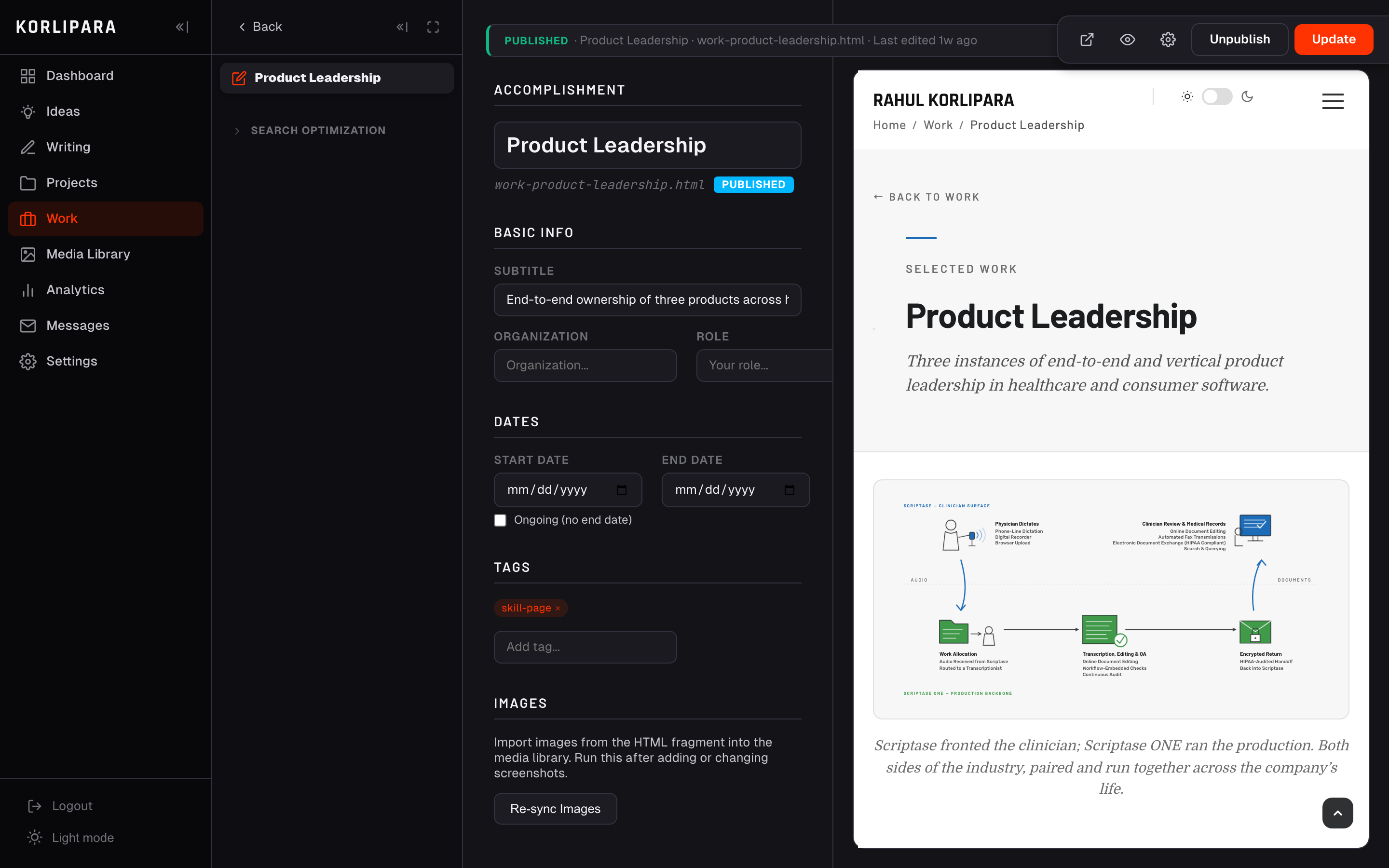
A configurable LLM prompt runs against every article before publication. It assesses thesis clarity, extractable takes, framework presence, strongest paragraph, and hook strength. The model flags; the reviewer decides.
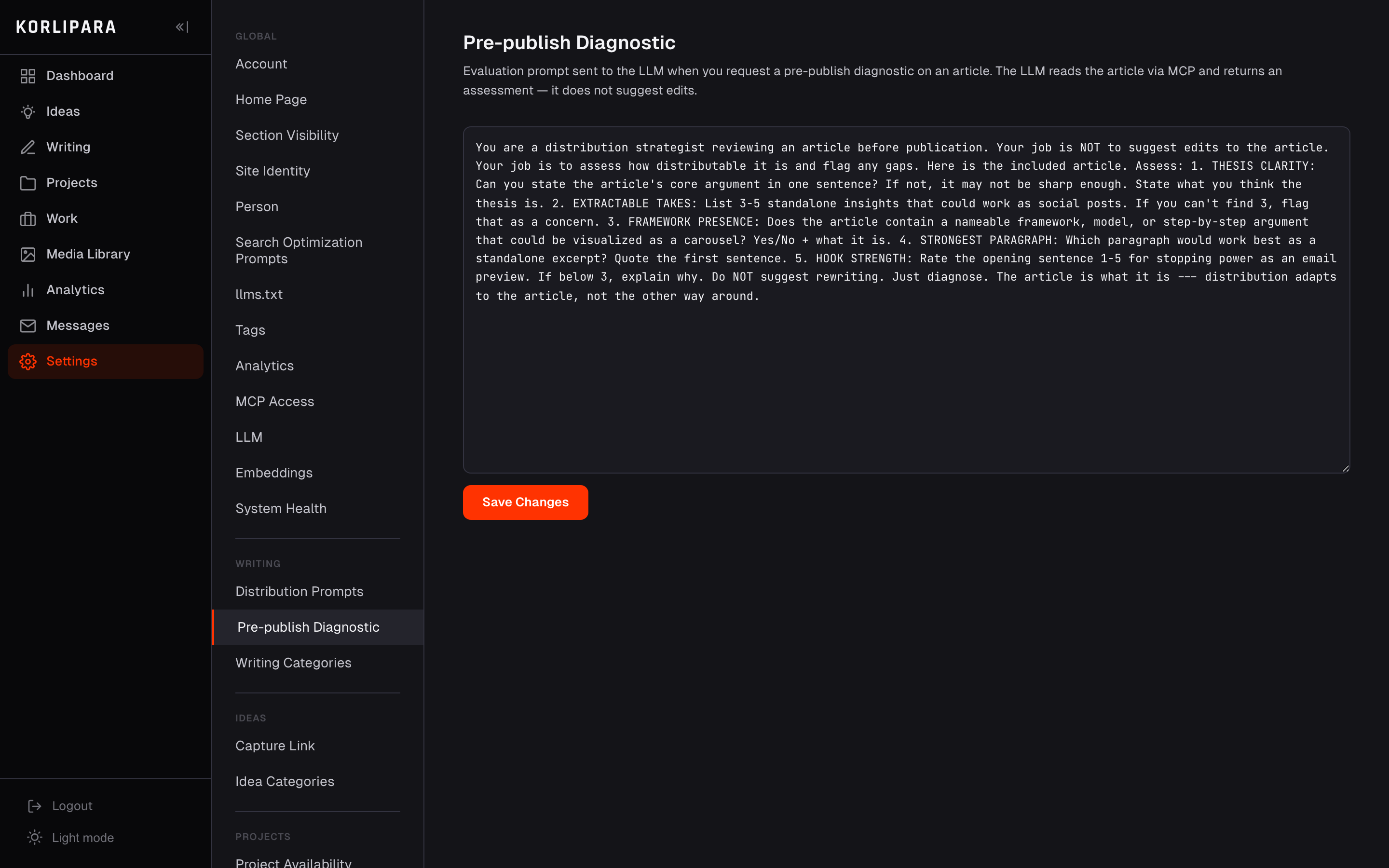
Every post produces nine distribution pieces, five short-form and four long-form. The model drafts each one and rates its own quality. The reviewer reads draft and rating side by side. Accept/reject feedback tunes the next round of prompts.
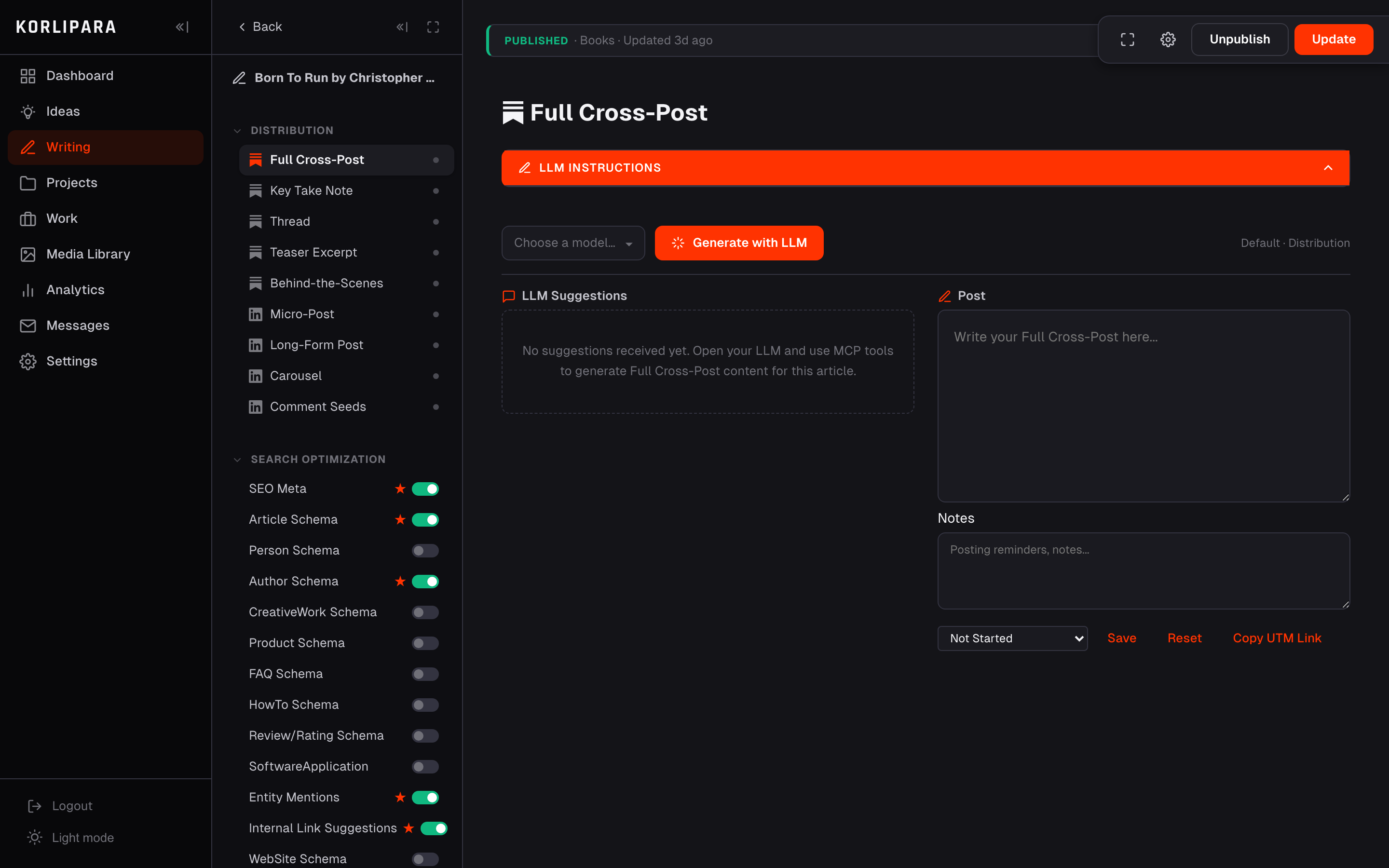
JSON-LD per content type, an llms.txt summary, a sitemap, and an RSS feed. Each schema is its own admin panel, populated by hand or by the LLM through MCP. Browser and agent fetch the same canonical data.
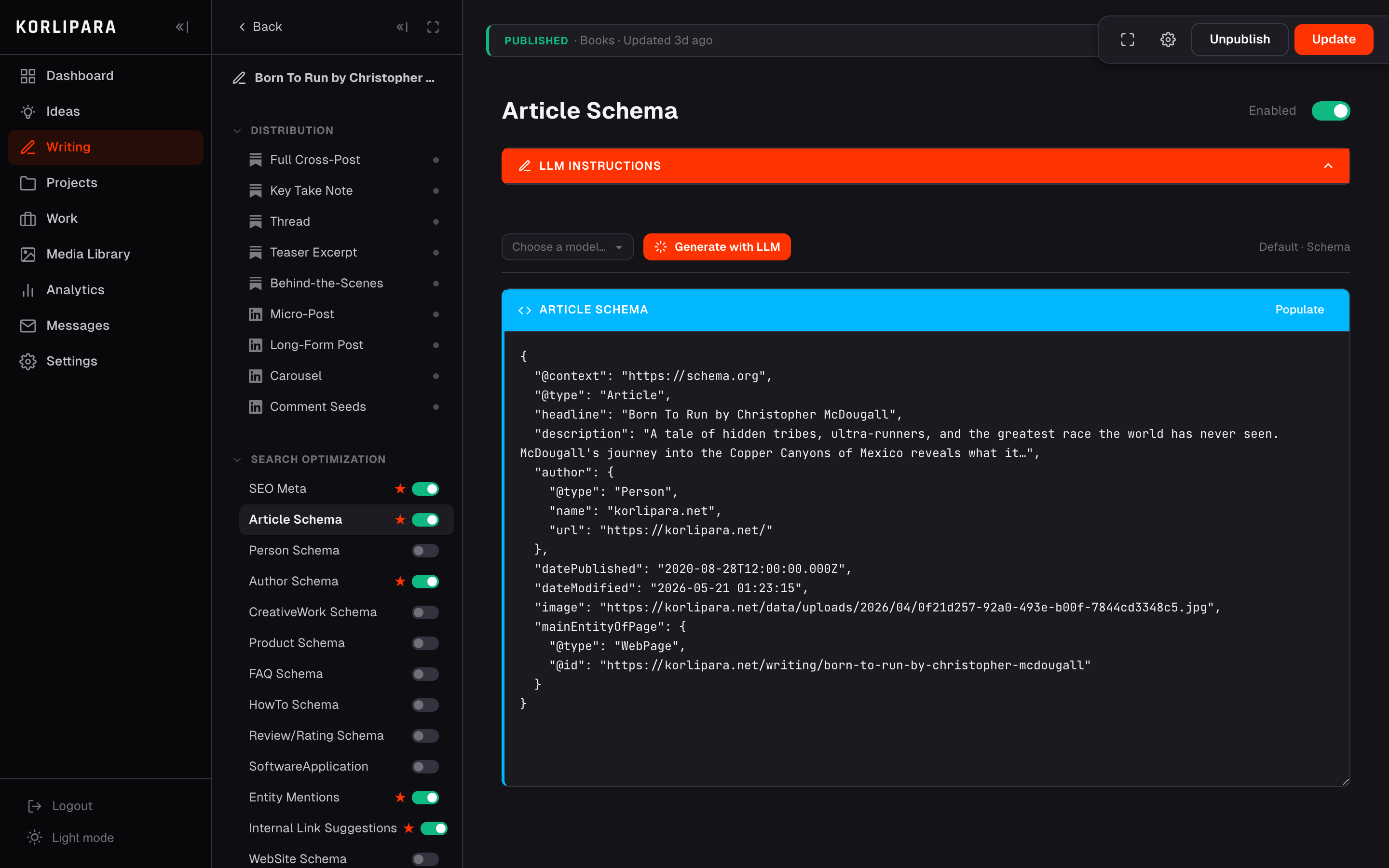
Portfolio pieces are hand-authored HTML fragments in the repo. The admin keeps a metadata row, surfaces a live preview, and tracks status, but does not template the layout. New files in the work folder show up automatically.
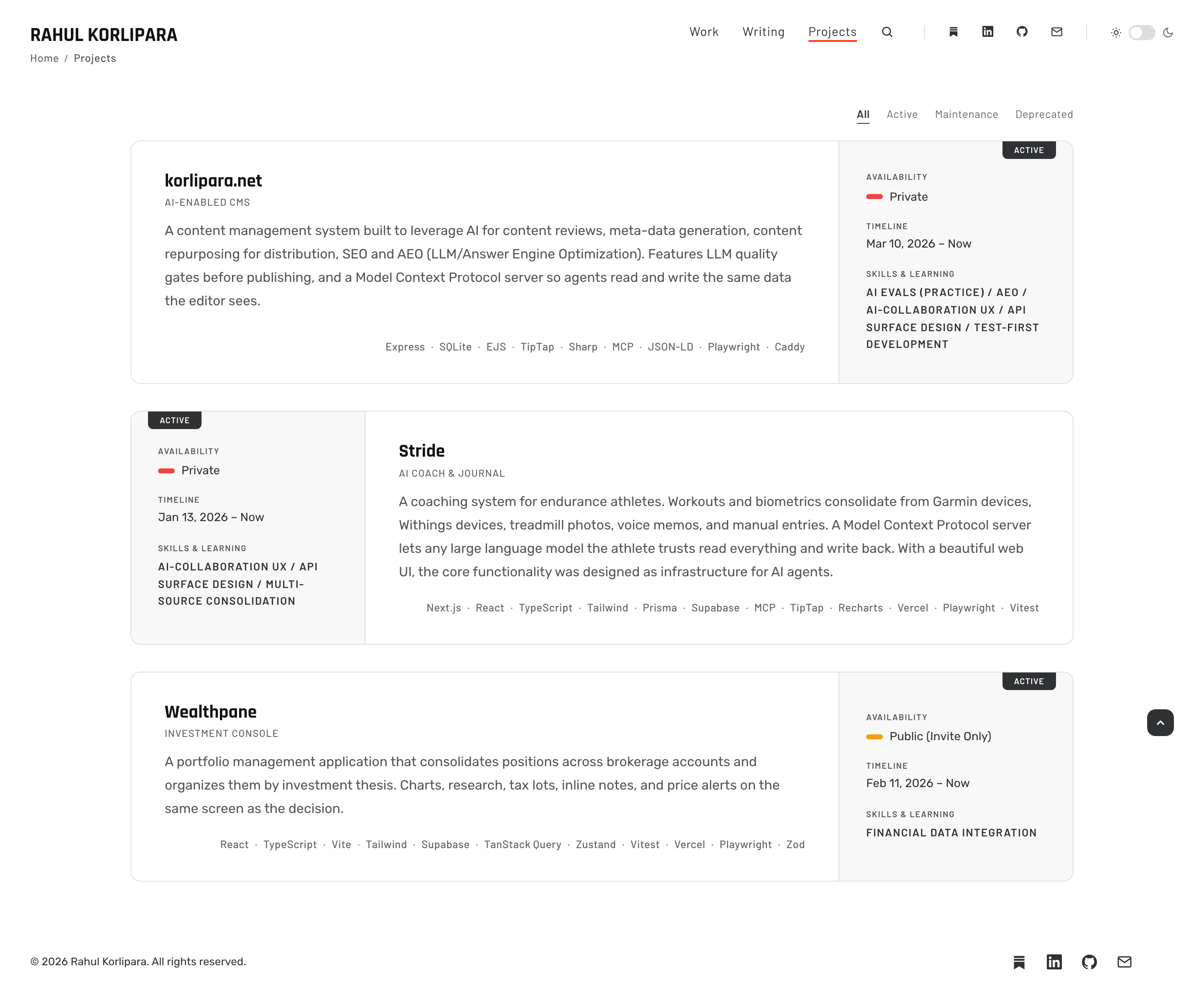
Project cards carry timeline, availability, skills, and tech tags in an asymmetric sidebar. Orientation alternates by display order. The same metadata feeds the card and the MCP read tools, so an agent and a reader see the same fields.
Built on TipTap. Articles get the full editor; short surfaces like the hero subtitle get an inline-only mode with bold, italic, and link. The editor knows which surface accepts what.
Articles render in a long-form column with sidebar metadata and a recommended-reading rail. The layout a long-form piece would want anywhere, served from infrastructure the writer controls.